| Elizabeth Goodman { // ITP 2001 - 2002 // Virtual Worlds // Project schematics |
|
concept // medias // models // interactivity // interface // display Concept / Storyboard " And when I say realism, I mean realism. This isn't just
a buzzword. Everything is going to ooze realism." This is what we go to first-person action games for: the rush of
adrenaline that only comes when your body truly feels like an experience
is real. When the danger is real. When what hangs
in the balance is... you. The "realism" of 3D action games depend upon one crucial
assumption to be enjoyable: that "you" are on the right
side of the gun. Or that you can fight at all. Multiplayer Doom
would be a disaster without the gun; a weaponless Castle Wolfenstein
would be murder. To take pleasure from these these virtual spaces,
we must at the same time believe in them and disavow their reality.
To get the adrenaline rush of risk, we must believe that our existence
in the virtual space of the game is real; to escape the actual trauma
of real war, we must believe that no one else's existence is. What would it be like to revisit the virtual space of a 3D action
game as a noncombatant? The game - and the worldview it promotes
- would look very different then. POV/POW mixes screenshots from
an actual action game (Soldier of Fortune) with recycled sounds
and actions to explore the familiar space of the action adventure
game from the perspective of a soldier, a child, and a gunshot victim.
|
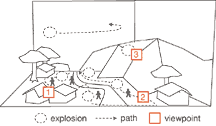
| Spatial diagram |
 |
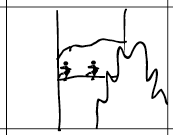
| View 1 |
 |
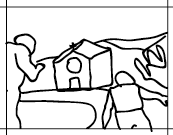
| View 2 |
 |
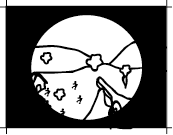
| View 3 |
 |