Recently in thoughtwar Category

Public smog

| | TrackBacks (0)

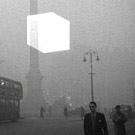
London Smog graphic for Public Smog art project

Just went to opening of VAPOR, an exhibit at Southern Exposure on pollution. One of my favorite projects there was Public Smog:

PUBLIC SMOG is a park in the atmosphere that fluctuates in location and scale. The park is constructed through financial, legal, or political activities that open it for public use.
Activities to create Public Smog have included purchasing and retiring emission offsets in regulated emissions markets, making them inaccessible to polluting industries.
When Public Smog is built through this process, it exists in the unfixed public airspace above the region where offsets are purchased and withheld from use. The park’s size varies, reflecting the amount of emissions allowances purchased and the length of contract, compounded by seasonal fluctuations in air quality.

One of the things I like about Public Smog is that, like PARK(ing), it invents a new kind of temporary 'public park' through entry into a market.
In Public Smog, the market is emission trading of greenhouse gases; in PARK(ing) it's the rate of payment for parking meters. They are tied to the forces (like polluting activities, or dependence on cars) that they attack. In that sense, they also gently play with the unrealistic idea that parks are spaces of 'nature' (sorry, have to use the scare quotes) - somehow separate from commercial spaces and processes that shape the rest of human settlements.
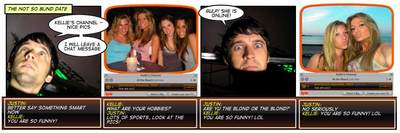

Sometimes, I just can't laugh it off the way I usually do. I thought this stuff went out with "Math class is hard!" Barbie jokes.

Screw you too, Kyte.

Trailer park

| | TrackBacks (0)


Kim Holleman

Study for Trailer Park, a portable park housed inside of an 18'x8'x7' trailer.

Trailer Park is a site of paradox. It is nonfunctional, yet completely functional in its repurpose. The trailer is convertible and mobile. Modifications to the interior include a drip irrigation system fed from water tanks under the trailer body and can also be fed by a city water connection.

I love the metaphor in so many ways, and yet to see it embodied...Dunno. It seems like there's a major point being missed here.

.... please do submit

in conjunction with 14th Annual Mardi Gras Conference, and
in cooperation with ACM SigCHI

15-17 February 2007, Baton Rouge, Louisiana

CONFERENCE URL: http://tei-conf.org

PROGRAM CHAIRS: Robert Jacob (Tufts University, USA), Eva Hornecker (HIT Lab NZ, University of Canterbury, NZ) Caroline Hummels (ID-Studiolab, TU Delft, NL)

CONFERENCE CHAIRS: Brygg Ullmer (Louisiana State University, USA) Albrecht Schmidt (Ludwig-Maximilian University Munich, Germany)


=================== DESCRIPTION ===================

TEI'07 is the first international conference dedicated to research in tangible and embedded interaction, and held in cooperation with ACM SigCHI. Work addressing HCI issues, design, use context, tools and technologies, as well as interactive art works are all welcome, including especially interdisciplinary submissions across these themes.

The proceedings will be available in printed form at the conference and be published electronically through the ACM Digital Library.

The conference will be held this year as the 14th Annual Mardi Gras conference at Louisiana State University, to be followed with an optional day trip to Mardi Gras in New Orleans.

The conference attempts to bring together the new field of tangible and embedded interaction, providing a meeting ground for the diverse communities of research and practice involved with tangibles -- from computing, hardware, and sensor technology, to HCI, interaction design, and CSCW, to product and industrial design and interactive arts. We invite submissions from all of these perspectives, be they theoretical, conceptual, technical, applied, or artistic. The conference is designed to provide appropriate presentation forms for different types of contributions including talks, interactive exhibits, demos or performances, and posters. We invite submissions in these different areas integrated within a single-track conference. Interdisciplinary submissions are particularly welcome.

reading of blogs brought to memory this quote from Infinite Jest.

Winter BS 1960 – Tucson AZ
Jim not that way Jim. That’s no way to treat a garage door, bending stiffly down at the waist and yanking at the handle so the door jerks up and out jerky and hard and you crack your shins and my ruined knees, son. Let’s see you bend at the healthy knees. Let’s see you hook a soft hand lightly over the handle feeling its subtle grain and pull just as exactly gently as will make it come to you. Experiment, Jim. See just how much force you need to start the door easy, let it roll out open on its hidden greasy rollers and pulleys in the ceiling’s set of spiderwebbed beams. Think of all garage doors as the well-oiled open-out door of a broiler with hot meat in, heat roiling out, hot. Needless and dangerous ever to yank, pull, shove, thrust. Your mother is a shover and a thruster, son. She treats bodies outside herself without respect or due care. She’s never learned that treating things in the gentlest most relaxed way is also treating them and your body in the most efficient way. It’s Marlon Brando’s fault, Jim. Your mother back in California before you were born, before she became a devoted mother and long-suffering wife and breadwinner, son, your mother had a bit part in a Marlon Brando movie. Her big moment. Had to stand their in saddle shoes and bobby sox and ponytail and put her hands over her ears as really loud motorbikes roared by. A major thespian moment, believe you me. She was in love from afar with this fellow Marlon Brando, son. Who? Who. Jim, Marlon Brando was the archetypal new-type actor who ruined it looks like two whole generations’ relations with their own bodies and the everyday objects and bodies around them. No? Well it was because of Brando you were opening that garage door like that, Jimbo. The disrespect gets learned and passed on. Passed down. You’ll know Brando when you watch him, and you’ll have learned to fear him…Brando the new archetypal tough-guy rebel and slob type, leaning back on his chair’s rear legs, coming crooked through doorways, slouching against everything in sight, trying to dominate objects, showing no artful respect or care, yanking things toward him like a moody child and using them up and tossing them crudely aside so they miss the wastebasket and just lie there, ill-used. With the over-clumsy impetuous movements and postures of a moody infant. Your mother is of that new generation that moves against life’s grain, across its warp and baffles. She may have loved Marlon Brando, Jim, but she didn’t understand him, is what’s ruined her for everyday arts like broilers and garage doors and even low-level public-park knock-around tennis. Ever see your mother with a broiler door? It’s carnage, Jim, it’s to cringe to see it, and the poor dumb thing thinks it’s tribute to this slouching slob-type she loved as he roared by. Jim, she never intuited the gentle and cunning economy behind this man’s quote harsh sloppy unstudied approach to objects. The way he’d oh so clearly practiced a chair’s back-leg tilt over and over. The way he studied objects with a welder’s eye for those strongest centered seams which when pressured by the swinishest slouch still support. She never…never sees that Marlon Brando felt himself as body so keenly he’d no need for manner. She never sees that in his quote careless way he actually really touched whatever he touched as if it were part of him. Of his own body. The world he only seemed to manhandle was for him sentient, feeling.

"The world he only seemed to manhandle was for him sentient, feeling." Beautiful.

The Five Obstructions

| | TrackBacks (0)

I just went to see The Five Obstructions, the new Lars von Trier documentary. It's about his relationship with Jorgen Leth, an older Danish director. I loathe von Trier, and unsurprisingly, he comes off as a giant putz. It's hard to imagine why Leth, an amiable and charming man, puts up with him. But that's partially the point: somewhere around the end of the third obstruction movie becomes an unexpectedly inspiring commentary on stubborn ingenuity, the power of constraints, and the complexity of friendship.

Oh, go see it. And then tell me what you think, alright?

Culture and coolness

| | TrackBacks (0)

Piling on to Anne's post, I want to add one more fusedspace competition entry to the list (w/thanks to Eric for suggesting it):

Entry 30: Online Chinatown
This proposal aims to enhance public space within Chinatown districts around the world; linking information, events and people using interactive technology

I am not so thrilled with the proposal per se, but I am pleased that it addresses the consequences of global migratory patterns. As anyone who's ever taken the Chinatown bus knows, "Chinatown" is a collective plural. It describes a web of diverse urban areas linked by family ties, bus routes, cultural associations, international phone calls, money orders, gifts. And I hadn't realized until I saw that one project how infrequently I see that web (and the other webs - the Little Saigons, the Koreatowns, etc) explicitly invoked as design rationales on the web.

the sight of speed

| | TrackBacks (0)

ct73545_satomi.jpg

Went this weekend to the Art Deco exhibit at the Fine Arts Museum. It was stunning.

I'd never seen footage of Josephine Baker dancing before, and so had never caught the crucial irony: there she was, the "savage" cabaret entertainer, with her bare breasts and her skirt of feathers...with an elegantly styled bob and delicate, well-made high-heeled shoes on her feet. You know, they say that if you really want to place someone socially, you need to check their haircut and their shoes...

More exciting, however, was this swoony 1920s poster from the Japanese designer Satomi Munetsugu. I am a sucker for Deco posters, as is much of the world, but I'd never heard of Satomi's work. This poster is a dramatic departure from the canonical Deco transportation iconography, which usually puts a static image of the means of transportation front and center. Here, the train almost disappears, subsumed into the blur of colors that is all you can see at high speed. The lettering disappears too - even the all-important name of the destination becomes a window through which we see the world fly by. It's as if Satomi just wants us to "focus" (ironic, here) on the act of seeing, rather than what is seen. What matters, he seems to be saying, is not the machinery of speed. Rather, it's the effect that new technologies have on human perception.

Facts by fragments

| | TrackBacks (0)

To collect these facts by fragments, to subject these fragments to varied tests in order to try their value, to make them into a sheaf of rays lighting up the darkness of the unknown and gradually emerge: all this demands a long space of time, especially as the favourable periods are brief. Years elapse; and then very often the perfect solution has not appeared. There are always gaps in our sheaf of light; and always behind the mysteries which the rays have penetrated stand others, still shrouded in darkness.
Fabre, The Insect World of J. Henri Fabre

J. Henri Fabre spent his entire life in the south of France, studying the insects he loved through painstaking, patient observation.

tele-phonies

| | TrackBacks (0)

Of the telephone conversations, 37 percent involved deception, while face-to-face conversations included lies 27 percent of the time. About 21 percent of the instant messages and 14 percent of the e-mailing included lies. Hancock also found that experienced e-mail users were more likely to lie more often. (emph mine)

...from an article on Cornell prof Jeff Hancock's study of lies and deception in communications.

swipe me

| | TrackBacks (0)

The SWIPE Toolkit is a collection of web-based tools that sheds light on personal data collection and usage practices in the United States. The tools demonstrate the value of personal information on the open market and enable people to access information encoded on a driver's license or stored in some of the many commercial data warehouses.

Turbulence.org has sponsored the project which includes directions on how to decode the 2D barcode on the back of some drivers licenses, get information on what kind of data commercial warehouses are collecting and selling on you, and a data calculator, which gives you "the fair market value of your data bits."

Easy. Free. Disconcerting.

via del.icio.us

"The Function of Feeling"

| | TrackBacks (0)

We focus upon frontiers; the peak of interest in a symbol tends to occur at the time of revelation, somewhere midway in the passage from the obscure to the obvious. But there is endurance and renewal, too. Discoveries become available knowledge only when preserved in accessible form; the trenchant and laden symbol does not become worthless when it becomes familiar, but is incorporated in the base for further exploration. And where there is density in the symbol system, familiarity is never complete and final; another look may always disclose significant new subtleties. (260)

So may a white house look white at noon, but red at sunset; and a globe looks round from any angle. Sensory and emotive experiences are related in complex ways to the properties of objects. Also, emotions function cognitively not as separate items but in combination with one another and with other means of knowing. Perception, conception, and feeling intermingle and interact; and an alloy often resists analysis into emotive and nonemotive components. (249)

- Nelson Goodman (sadly, no relation), Languages of Art, 1968.

Chris Hackett from the Madagascar Institute was recently badly hurt in an explosion while building a confetti gun to start off the Idiotarod. You can donate at the Madagascar Inst's site.

They've been promising for years that someday something might go "horribly, horribly wrong," and now it did, and it's not fun at all.

The mailbox as fortress

| | TrackBacks (0)

Addendum: I've been getting a lot of comment spam on this entry, so I'm removing commenting from it until I get the spam filter working for this site. Sorry. Email me if you have anything to talk about and I'll be happy to respond.

- L.


Mr. Shreve said that a customer called to tell him about a boy who injured himself trying to whack a Defender mailbox with a baseball bat from a moving car. "I don't know if his arm was broken or dislocated, but he was in a lot of pain," Mr. Shreve said.

For $795 and in any of seven colors, the Defender gives you peace of mind, knowing that your enormous tax refund, royalty check or new credit card sits securely behind seam-welded steel an eighth of an inch thick. The box itself stands about four feet high on a tapering pedestal that makes the slightest nod to evening wear, and it holds a package of 9 by 9 by 12 inches. The pedestal is hollow so that it can hold many days' worth of mail — in case you are traveling.

from the NY Times

No, for sheer peace of mind, forget a firewall or crypto. Want you really want is steel. I want to discuss here - again - physical presence, and the reassurance power of tangible objects. Their affectiveness. It's easy to snicker at the Defender. I know, because I'm snickering right now. But if activism takes its power from issues that people can control, then the Defender is a whacking great piece of personal activism for (snicker) $795.

I wouldn't spend $795 on a mailbox, even if I had the money. But if money is an index of concern, then I would spend at least that much in Liz-terms to get some reassurance about something that worries me a great deal more: the fuzziness of my electronically-stored data in a world of corporate-owned databases. Servers are so hackable and demographic information is worth too much money.

I know I have a data shadow, but I know that I cannot imagine its extent, or where it is cast. That's the problem - I don't know who wants to know what about me. Mail theft, in contrast, is so wonderfully limited. It is imaginable. It occurs during a moment of human inattention at an end point of an extremely regulated and surveilled system. The solutions have heft and mass. My days are measured in cycles and bitflips, and I believe in them. But I wish data privacy could feel so...real. Solid. It's difficult to feel reassured when the problem is - literally - invisible and the safeguards wouldn't stop a baseball bat.

Which is why I'm sure the Defender - or something priced slightly less - will do very well for itself.

lots of latter-day blogging

| | TrackBacks (0)

I've been in the UK for a while, going to a conference and seeing friends, and haven't had much luck with Internet connectivity. What follows (or precedes, given the ordering of this blog) is a belated posting of conference notes and miscellany.

Cheers.

Real attackers

| | TrackBacks (0)

Catching up on some reading, I found via danah a great article from SecurityFocus HOME News on social networks sites and privacy/security (note: the two are not equivalent!):

Of course, sometimes an LJ attack is more subtle. By gaining access to someone's account, as LJ user Jack discovered, an attacker becomes privy to the "private" posts of friends. Ultimately, there is little defense against these social attacks, just as there is no way to stem the tide of gossip in the real world. Matthew Ringel, a longtime LJ user, wrote via email, "If I had a dollar for every time a friend in a social group accidentally 'leaked' some information about an LJ posting to someone who wasn't in the friends filter for it, I'd be typing this on a new laptop. There's no technical solution for gossip."

The article goes on to point out that such a malicious person is not a "real attacker" because s/he targets individuals personally, not entire classes of users. We can continue the distinction by looking at motivation: because those kinds of attackers act by revealing damaging information, not through hijacking social networks for gain. On the other hand, since the bonds created by social software are only as strong as the trust that their users have in them, the social repercussions of malicious attacks shouldn't be discounted. Even though the attackers don't steal anything immediately "valuable"*, the loss of audience trust is a "real" problem that can fracture communities. It's homicide vs. ground water pollution.

* Although it really does seem like a great way to get detailed demographic info for directed spamming, doesn't it?

I'm sad

| | TrackBacks (0)

My server was the victim of an exploit a few days ago. My hosting company gave me the bad news as soon as they discovered what had happened, but they, um, didn't tell me just how bad it was. I just went to check a few minutes ago and am, um, appalled.

Yes, I mostly kept backups. Mostly. I should have been better about it, I know. I know. But I lived in NYC for 5 years and never got mugged, so I suppose I felt a little invulnerable.

It's not so much that every single HTML page has been overwritten -- I can deal with that. Okay, alright, now they're some badass computer geeks. Great. It's that I've even lost Illustrator files. I mean, they could have just stuck to the HTML files and gotten the point across just fine.

I wish I could report this to the cops or something. I need closure of some sort.

weekend reading

| | TrackBacks (0)

Read this weekend...
Bringing Design to Sofware, eds Terry Winograd, John Bennett, Laura de Young, Brad Hartfield. And especially:
The Role of the Artist-Designer, Gillian Crampton Smith and Philip Tabor. Published in 1996, the illustrations look archaic yet the advice feels sound. I wish I'd read it seven years ago.

Harmless?!, pt II [grid::brand]

| | TrackBacks (2)

A week or so ago, in Portland, I had drinks with a few Nike designers. Nike is the biggest employer for designers in town, and they were talking up Nike as a place to look for a job. One of them was a shoe designer, and the other was a graphic designer. So I'm chatting with the graphic designer about the profession of graphic design, and specifically about the downsides. And then he says:

"But you know, graphic design is essentially harmless." (my ital.)

Which gets me back to my drastically unfinished post of a while ago, about why graphic design is not and never has been harmless. Damn it.

Graphic design - especially cool graphic design - is the pretty face of mass market capitalism. As Thomas Frank puts it, "Rebel youth culture remains the cultural mode of the corporate moment." The cooler you think your portfolio is, the more quickly it will be incorporated into an ad campaign for the overpriced, made by the underpaid, bought by the supersized. The creation of cool is never harmless - no matter how well-meaning the creators are. Nonrebellious design is not necessarily never harmful, though; think about the designers of Enron's annual reports. Or the sainted Paul Rand, who created Enron's logo in 1996. As a graphic designer, you're doomed. The more you're paid, the likelier you are to have a job selling stuff that nobody needs to people who probably can't afford it. The Enron graphic designers especially. Obviously, they're not even close to Ken Lay, but they're not quite...innocent either. Like all of us, they were just paying the rent in the best way they knew.

One traditional answer to this dilemma is to do lots of volunteer work to make up for all the annual reports and business cards. Another traditional answer is to make less money and do more work for socially responsible clients. Neither one of those addresses the second big reason why graphic design is not and never has been harmless. Damn it.

Forget the trees lost and the Pantone reds of polluted rivers. Graphic design is the native tongue of information overload, the lingua franca of the cool hunter and the lame-ass bulk mailer alike. We all like to think of graphic designers as the people who make text books or political posters or really good airport signage systems. When Steven Heller references a good-citizenship quiz created by the slightly-less-sainted-but-still-pretty-great Milton Glaser, he mentions only cases where designers create dishonest or misleading visual impressions. But most graphic designers don't do safety manuals. They design the flyers plastered on your windshield and coupons you immediately trash and sportswear packaging and sometimes, oh my God, popup ads or advertorials. In these cases, the harm is not in graphic designers' business ethics. No, it's that they took the job in first place. A huge chunk of what graphic designers do for a living is not even mostly harmless.

Believing in the essential "harmlessness" of graphic design as an industry (despite the empirical evidence to the contrary that arrives every day in our mailboxes) helps assuage any lingering art school guilt on the part of us laboring members of the creative classes. I mean, we all do have to pay the rent somehow, and I'm not joining the moral condemnation business. I've designed mass mail catalogues myself. Graphic designers can honestly tell themselves that they aren't soldiers for hire or oil company execs or mutual fund mismanagers. And at its best, graphic design does make the world better. Who wouldn't rather have a pretty glossy magazine than an ugly one, or a clear presidential ballot than a confusing one? Still, while we may like to pretend that the message we're selling is inherently more worthy of existence than other people's, whatever the message, we're already embedded reporters of the Infocalypse.

[Addendum: It's been pointed out to me that maybe the original post I'm ranting about was ironic. Okay. Maybe.]

[Addendum2: This is a part of ashleyb's grid blogging project. Hence the title.]

Observing design

| | TrackBacks (0)

Design Observer is a new blog written by Michael Beirut, Jessica Helfand and William Drenttel, and Rick Poynor - all influential critics and practioners of graphic design.

My undergrad degree is in graphic design, and the idea that Design Observer gives daily access to my college heroes is a shivery nineteen-year-old thrill. In fact, it's the sortof thrill that make blogs exciting in the long run. Rick Poynor, up close and personal...Rick Poynor...unplugged. Well, actually it's Rick Poynor plugged in, but you get the point.

It's a thrill that's entirely unrelated to the life I lead now, because I actually haven't read eye magazine, which Poynor founded, since late 2000. I can date it so precisely because 2000 was when I started doing so much freelance theater design and interaction design that there just weren't hours enough in the day. Instead of consuming my days, graphic design has become a useful sideline. My presentations look nicer, my business cards are more personal, and my charts are clearer than they would otherwise be. Now out of grad school, there are enough hours in the day to read eye, but I tend to forget that it even exists -- just as I tend to forget that theater magazine exists as well. The world of "design" is so large that from any one perspective, the other continents are beyond the horizon.

So it's a bit alienating to return to graphic design criticism. I vaguely remember the country. I still even speak the language, just with the vocabulary of a much younger woman. Everything is less smaller than I remembered, though, and the leaders are less god-like and more fallible.

In a post on the AIGA's Power of Design conference in Vancouver, Michael Beirut writes about a presentation on the environmental damage caused by Pantone print inks:

And what greater power than to discover forensic proof that even this seemingly harmless profession has the capacity to inflict damage, as well as to do good?

For Beirut, this is a "new certainty" for designers, following a succession of old certainties about the purpose of graphic design:

  • that the role of design is to save the world through Swiss modernism
  • that the role of design is self-expression for the designer
  • that the role of design is to "change the world by subverting the goals of its corporate patrons"
  • that the role of design is to allow designers to act as "authors" (I don't really understand how this differs from "self-expression," but perhaps the point becomes about changing the external environment, not just representing an internal one.)

Perhaps, writes Beirut, this certainty of ecological damage caused by a "seemingly harmless" profession is the "ultimate" certainty.

I have one word for Beirut: well, duh. Sorry. That was two.

Renovating my vocabulary

| | TrackBacks (0)

Last week I gave a talk that seemed, well, notably unsuccessful. It's not the project's fault; the talk just wasn't one of my more shining moments as a communicator. During the question session afterwards, I felt like my head was wrapped in cotton wool. I could not manage to explain the importance of methods and processes that I use and believe in, or even explain the importance of "design" as a response to the world. In the wake of the talk, I've been spending a lot of time reconsidering, rethinking, and re-explaining to myself what it is I do believe in, and how to articulate it.

Via Brian Parkinson comes this quote from "People-centered design: complexities and uncertainties," in Design and the Social Sciences:

"We have to stop thinking of design as the construction of graphics, products, services, systems and environments, and think about those as means for people to act, to realize their wishes and satisfy their needs. It is the needs and the wishes of people that we have to serve: the objects of design must be seen only as means."

Okay. I believe in this.

Another essay in the collection, by Jorge Frascara, can be found here. I haven't read it yet, though.

The Kinko's Connection

| | TrackBacks (0)

In conversation with E.C., I remembered an essay I hadn't read for years: "Kinko's and The Connection". Back in the day (ie, 1997), the sacramental mystery of the transformation of pixels to toner was my central concern. Since then, I've mostly left the world of CMYK. I miss the irreversibility of print. I miss the way toner reproduces inexactly, runs out, fades, smears. I know printouts aren't supposed to have what Benjamin would call an "aura" - but there's nothing really like feeding meltable plastic into a copier that costs more than you make in a year and waiting to see what comes out on the other end. I remember it fondly, I do.

When you place an "original" in the feeder of a copier you expect versions of that document to reproduce as closely to the original as possible. The truth of the document is determined by the quality of the copy. Yet Kinko's usually produces as many mistakes as it can quality copies. The Connection phenomena functions as one form of "mistake" in the massive production apparatus of Kinko's. Barter transactions, copyright violations, the kinds of customers who use Kinko's Connections, are the inevitable noise of a reproductive model of Kinko's business. The improper circumstances of my Kinko's experience lead me to an improper understanding of Kinko's philosophy: play instead of work, mutation instead of replication, barter instead of money transactions, toxic instead of a "clean" layout, and, most importantly, deformation over information.

Dirty data is good for you

| | TrackBacks (0)

another entry lost to overzealous spam deletion

I See You

| | TrackBacks (0)

This is old news, but the Institute for Applied Autonomy's iSee mapping webapp, which generates surveillance-camera-free paths through New York, is useful and beautiful and I want their mapping code for New York for Fiasco. Plus, they have the only Flash intro that's not a waste of time that I've ever seen.

Paul Elliman on screens

| | TrackBacks (0)

Paul Elliman is a British graphic designer. Official bios always seem to make a point of saying that he is "self-trained," as if it's somehow shocking that he does such great design without a couple of letters after his name. I suppose it is unusual, but Elliman is an unusual person himself.

He was my undergrad final project advisor. I would have jumped through flaming hoops to win his approval, but unfortunately the art department was short on circus equipment that semester.

Here he is talking with Michael Rock, another fantastic designer, about the cultural meanings of screens.

this is so genius. click through until you get to the very, very end. the instructions for young graffiti artists are amazing:

When explaining yourself to the Police its worth being as reasonable as possible. Graffiti writers are not real villains. I am always reminded of this by real villains who consider the idea of breaking in someplace, not stealing anything and then leaving behind a painting of your name in four foot high letters the most retarded thing they ever heard.

Remember crime against property is not real crime. People look at an oil painting and admire the use of brushstrokes to convey meaning. People look at a graffiti painting and admire the use of a drainpipe to gain access.

http://www.banksy.co.uk/menu.html

via Anne Galloway of course

Unreal disasters

|

So apparently there's an "FPS" concept game that takes on the events of 9/11 from a victim's point of view. The goal is to escape from the towers. The site is not up currently, so I can't really comment on it. It does, however, use the Unreal engine, which is so ironic I can't even take the meta-ness of it all.

This is of course related to my POV/POW project, which looks at FPS games in the context of the war experiences of civilians, especially women and children.

via Metafilter

addendum: The site is now up. I got to the index page and just couldn't look any more. It's not PTSD or anything, but there are some images I can't look too closely at. I'm sorry. Someone else will have to talk about this game.

About this Archive

This page is a archive of recent entries in the thoughtwar category.

public spaces is the previous category.

urbanity is the next category.

Find recent content on the main index or look in the archives to find all content.

Pages

  • /thinking
  • projects
Creative Commons License
This weblog is licensed under a Creative Commons License.